10 Things to Consider When Choosing Self Storage in Cardiff [2026]
Finding the right storage unit can feel overwhelming. Cardiff has plenty of options, but they’re not all equal. Some facilities hide fees in the fine print. Others skimp on security or lock you into rigid contracts.
Whether you’re clearing space during a house move, storing business stock, or keeping your belongings safe between university terms, the wrong choice costs you time and money. The right choice gives you peace of mind.
We’ve researched what actually matters when selecting self storage in Cardiff. This guide covers the 10 things to consider when choosing self storage in Cardiff, from location and security to pricing and reputation. Each factor could make or break your experience.
You’ll find practical advice based on real storage scenarios. No fluff, no jargon: just the information you need to make a confident decision. By the end, you’ll know exactly what questions to ask and what red flags to avoid.
Quick Comparison Table
| Factor | Best For | Pricing Impact | Key Feature |
|---|---|---|---|
| Location & Accessibility | Frequent access needs | Higher near city centre | Drive-up access availability |
| Unit Sizes | Matching space to belongings | Pay only for what you need | Range from boxes to house contents |
| Security Features | High-value items | Premium for enhanced security | 24-hour CCTV monitoring |
| Access Hours | Business users | Extended hours may cost more | Early morning to late evening |
| Pricing & Offers | Budget-conscious customers | Introductory discounts available | No deposit options |
| Flexible Terms | Short-term storage | Week-by-week available | No long-term commitment |
| Business Storage | Commercial users | Volume discounts possible | Stock and equipment space |
| Student Storage | University students | Seasonal rates | Summer holiday availability |
| Loading & Parking | Large item storage | Usually included | Wide access doors |
| Reviews & Reputation | Peace of mind | Reflects service quality | Verified customer feedback |
1. Location and Accessibility
Your storage unit’s location affects everything from convenience to cost. A facility across town might offer cheaper rates, but you’ll spend more on fuel and lose valuable time with each visit.
Consider how often you’ll need access. If you’re storing seasonal items you’ll retrieve twice yearly, distance matters less. But if you’re running a business and need daily access to stock, proximity becomes critical.
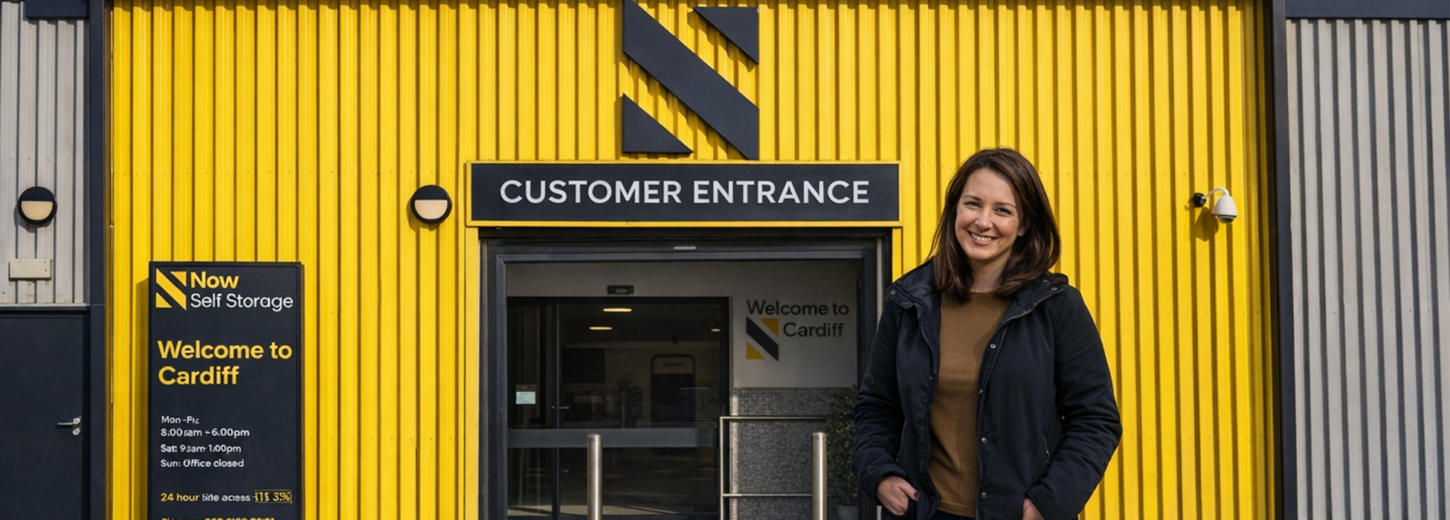
Cardiff facilities vary widely in accessibility. Some sit in industrial estates with straightforward vehicle access. Others occupy cramped side streets where manoeuvring a van becomes a headache. The Now Storage Cardiff facility at Jubilee Trading Estate (CF24 5EF) sits a short drive from the city centre, serving areas including Splott, Adamsdown, and Roath.
Pros:
- Central locations reduce travel time and fuel costs
- Easy vehicle access simplifies loading and unloading
- Nearby facilities allow quick retrieval when needed
Cons:
- Prime locations often command higher prices
- Urban facilities may have limited parking
- Rush hour traffic can complicate access times
Pricing: Expect to pay 10-20% more for centrally located storage compared to facilities on Cardiff’s outskirts.
Best for: Business users who need regular access, or anyone storing items they’ll retrieve frequently.
2. Storage Unit Sizes Available
Choosing the wrong unit size wastes money. Too small, and you’ll cram items in unsafely or need a second unit. Too large, and you’re paying for empty space every month.
Good facilities offer a genuine range. Compact units suit archive boxes, student belongings, or seasonal decorations. Medium units handle furniture from a single room or a small flat’s contents. Large units accommodate entire house moves or significant business inventory.
The Cardiff storage market typically offers units from around 16 square feet (roughly a large wardrobe) up to 200+ square feet (capable of holding Transit van loads or approximately 100 archive boxes). Reputable providers help you estimate your needs based on what you’re storing.
Pros:
- Right-sized units prevent overspending
- Flexible sizing accommodates changing needs
- Staff guidance helps avoid costly mistakes
Cons:
- Popular sizes may have waiting lists
- Estimating needs accurately requires effort
Pricing: Smaller units (16-25 sq ft) typically start from £20-40 weekly. Larger units (100+ sq ft) range from £80-150+ weekly depending on the facility.
Best for: Anyone wanting to match their storage space precisely to their belongings without paying for unused capacity.
3. Security Features and CCTV
Your belongings deserve proper protection. Security standards vary dramatically between facilities, and cutting corners here risks everything you’re storing.
Essential security features include 24-hour CCTV monitoring, individually alarmed units, secure perimeter fencing, and controlled access systems. The best facilities combine multiple layers of protection.
Pros:
- 24-hour CCTV provides continuous monitoring
- Individual unit alarms detect unauthorised access
- Controlled entry limits who enters the facility
Pricing: Basic security is usually included in standard rates.
Best for: Anyone storing valuable items, important documents, or irreplaceable belongings.
4. Access Hours and Convenience
Standard business hours don’t suit everyone. If you work 9-to-5, a facility that closes at 6pm forces you to use weekends or take time off work.
Extended access hours matter for business users especially. Tradespeople often need early morning access before heading to job sites. Retailers may require evening access to restock after closing. Students might need weekend access when moving between terms.
Cardiff facilities typically offer access from early morning until late evening. The key is matching access hours to your actual usage patterns.
Pros:
- Extended hours accommodate working schedules
- Early and late access suits business operations
- Weekend availability helps residential customers
Best for: Business users, tradespeople, and anyone whose schedule doesn’t align with standard office hours.
5. Pricing and Introductory Offers
Storage pricing should be transparent. Hidden fees, unexpected charges, and unclear terms create frustration and erode trust.
Base rates depend primarily on unit size and rental duration.
Introductory offers can provide genuine savings. First-week-free deals, percentage discounts on initial months, and no-deposit options reduce upfront costs. Now Storage Cardiff, for example, occasionally offers introductory discounts with standard rates applying afterwards.
Pros:
- Promotional offers reduce initial costs
- No-deposit options improve cash flow
- Clear pricing prevents unexpected charges
Pricing: Cardiff storage typically ranges from £4-8 per square foot monthly. Introductory offers might save 20-50% initially.
Best for: Budget-conscious customers who want value without sacrificing quality or security.
6. Flexible Rental Terms
Life doesn’t follow neat schedules. A house sale might complete early or fall through. Business storage needs fluctuate seasonally. Student accommodation dates shift annually.
Rigid contracts create problems. Minimum terms of three, six, or twelve months force you to pay for storage you might not need. Look for facilities offering genuine flexibility: weekly rolling agreements, easy downsizing, and straightforward exit processes.
The best providers understand that your needs change. They’ll let you switch unit sizes as requirements evolve, extend or reduce terms without penalties, and provide clear notice periods for ending agreements.
Pros:
- Rolling contracts avoid long-term commitment
- Easy unit changes accommodate shifting needs
- Simple exit processes reduce stress
Cons:
- Popular sizes might not always be available
Best for: Anyone facing uncertain timescales, including house movers, businesses with variable needs, and students between terms.
7. Business Storage Options
Commercial storage needs differ from residential requirements. Businesses need reliable access, appropriate unit configurations, and facilities that understand commercial operations.
Consider what you’re storing. Retail stock requires different conditions than construction equipment. Document archives need dry, secure environments. E-commerce inventory benefits from organised, accessible layouts.
Good business storage providers offer practical features: wide access doors for pallet deliveries and flexible sizing as your business grows or contracts.
Pros:
- Dedicated business facilities understand commercial needs
- Scalable space grows with your operation
- Cheaper than traditional warehouse leases
Cons:
- Heavy goods may require ground-floor units
Pricing: Business storage typically costs £100-300+ monthly depending on size and features. Volume discounts may apply for larger requirements.
Best for: Small businesses, retailers, tradespeople, and e-commerce operators needing flexible commercial space.
8. Student Storage Availability
Cardiff’s university population creates specific storage demands. Students need affordable, short-term solutions during summer breaks, placement years, or when travelling.
The academic calendar drives student storage. Peak demand hits during June and July as terms end. Competition for units intensifies, and prices may rise. Booking early secures availability and potentially better rates.
Student-friendly facilities offer term-aligned contracts, smaller unit options suited to typical student belongings, and straightforward booking processes. Some provide collection services from university accommodation, though this adds cost.
Pros:
- Local storage beats transporting items home
- Flexible terms match academic schedules
- Smaller units keep costs manageable
Cons:
- Peak season availability can be limited
Pricing: Student units typically range from £30-60 monthly for smaller spaces. Summer-only deals may offer discounts.
Best for: University students needing secure storage during holidays, placements, or study abroad periods.
9. Ease of Loading and Parking
The physical process of moving items matters more than many people realise. Narrow corridors, distant parking, and awkward access points transform a simple task into an exhausting ordeal.
Drive-up access simplifies everything. You park directly outside your unit, unload without carrying items long distances, and complete the job faster. This matters especially with heavy furniture, numerous boxes, or frequent visits.
Practical considerations include door widths (can your sofa fit?), trolley availability, lift access for upper-floor units, and adequate turning space for larger vehicles. Visit facilities before committing to assess these factors personally.
Pros:
- Drive-up access minimises carrying distances
- Wide doors accommodate bulky items
- Good parking prevents loading delays
Best for: Anyone storing heavy items, large furniture, or expecting frequent access visits.
10. Reviews and Reputation
Reviews expose the reality of dealing with a storage provider: how they handle problems, whether staff are helpful, and if the facility matches its promises.
Check multiple sources. Google reviews, Trustpilot, and social media provide different perspectives. Local recommendations from friends or colleagues who’ve used Cardiff storage facilities offer valuable first-hand insights.
Pros:
- Reviews reveal real customer experiences
- Recommendations from trusted sources reduce risk
Pricing: Reputation doesn’t directly affect pricing, but well-reviewed facilities justify their rates through better service and reliability.
Best for: Anyone wanting confidence that their chosen facility will deliver on its promises.
Frequently Asked Questions
How much does self storage cost in Cardiff?
Prices vary based on unit size and facility quality. Expect £30-50 monthly for small units suitable for boxes and student belongings. Medium units for room contents typically cost £60-100. Larger units for house moves or business storage range from £100-200+. Introductory offers can reduce initial costs significantly.
Do I need insurance for stored items?
Yes. Most Cardiff facilities require customers to have insurance covering stored belongings. Some offer their own policies; others accept existing home contents insurance that extends to storage. Check your current policy before arranging separate cover.
Can I change unit sizes during my rental?
Reputable facilities accommodate size changes as needs evolve. You might downsize after sorting through belongings, or upgrade when storing additional items. Ask about the process and any associated fees before committing.
How far in advance should I book storage?
For standard requirements, a week’s notice usually suffices. During peak periods (summer months, month-ends), booking 2-3 weeks ahead secures preferred unit sizes. Student storage during June and July benefits from earlier booking.
What can’t I store in a self storage unit?
Prohibited items typically include hazardous materials, perishable goods, and living things. Flammable substances and chemicals aren’t permitted. Facilities provide specific prohibited item lists.
Making Your Decision
Choosing storage comes down to matching your specific needs with the right facility. House movers prioritise flexible terms and easy loading access. Business users need extended hours and scalable space. Students want affordability and term-aligned contracts.
Security and location matter for everyone. Don’t compromise on 24-hour CCTV and proper access controls. Choose a facility you can reach conveniently, especially if you’ll visit regularly.
Price matters, but value matters more. The cheapest option with poor security or inconvenient access costs you in other ways. Look for transparent pricing, genuine flexibility, and positive customer reviews.
If you’re ready to find your ideal storage solution, the Now Storage Cardiff team can help you choose a unit size that works for your situation. Get in touch today to discuss your requirements and receive straightforward guidance on the best option for your needs.

Related news

Supporting Our Local Community This Festive Season
18th Dec 2025Supporting Our Local Community This Festive Season At Now Storage, we believe that Christmas is a time for giving back. This festive season, we were proud to support Cheltenham Foodbank, a vital local charity providing emergency food and support to …
Read article Cheltenham
New Cheltenham Indoor Storage Facility
20th Aug 2025Our New Indoor Storage Facility in Cheltenham Looking for safe, secure, and flexible storage in Cheltenham? We’re delighted to announce the opening of Now Storage Cheltenham, a brand-new indoor self-storage facility conveniently located on Hayden Road, Uckington in Cheltenham. Situated …
Read article Cheltenham
Our Cheltenham Facility Is Now Open!
16th Oct 2023Based in or around Cheltenham and need more space? Now Storage is here to help with a brand new self-storage facility! Now Self Storage is now available in Cheltenham. Located close to the town centre and Tewksbury Road, our Cheltenham …
Read article CheltenhamReviews
Your questions answered
In need of some assistance? Check out our FAQs or for free friendly advice.
Or you can find the phone number for your local storage facility here